
02.04.2026
Moldova strengthens agricultural advisory services through climate-resilient training programme
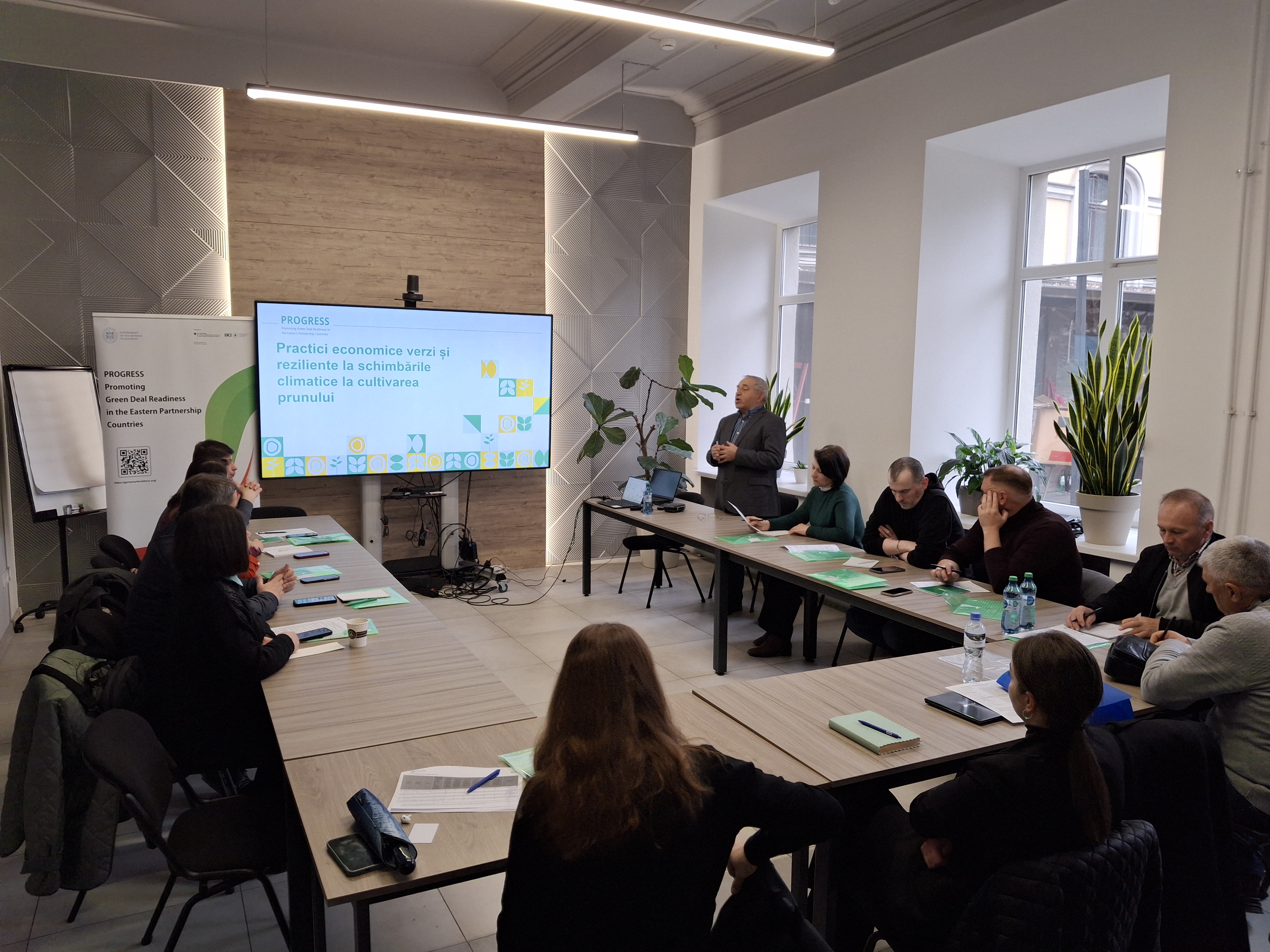
The Republic of Moldova is advancing its transition towards sustainable and climate-resilient agriculture through a newly launched training programme for agricultural advisors focused on green practices in the fruit sector.
The programme is implemented by the Agricultural and Rural Advisory Centre (CCAR) with support from the PROGRESS project, financed by the German Government and implemented by Deutsche Gesellschaft für Internationale Zusammenarbeit (GIZ), in partnership with EBA Moldova, IEF, OECD and RECC.
Supporting climate adaptation in the fruit sector
The programme focuses on strengthening the capacity of agricultural advisors to support farmers in adopting environmentally sustainable and climate-resilient practices, particularly in the cultivation of stone fruits and nuts—key sectors for Moldova’s agriculture.
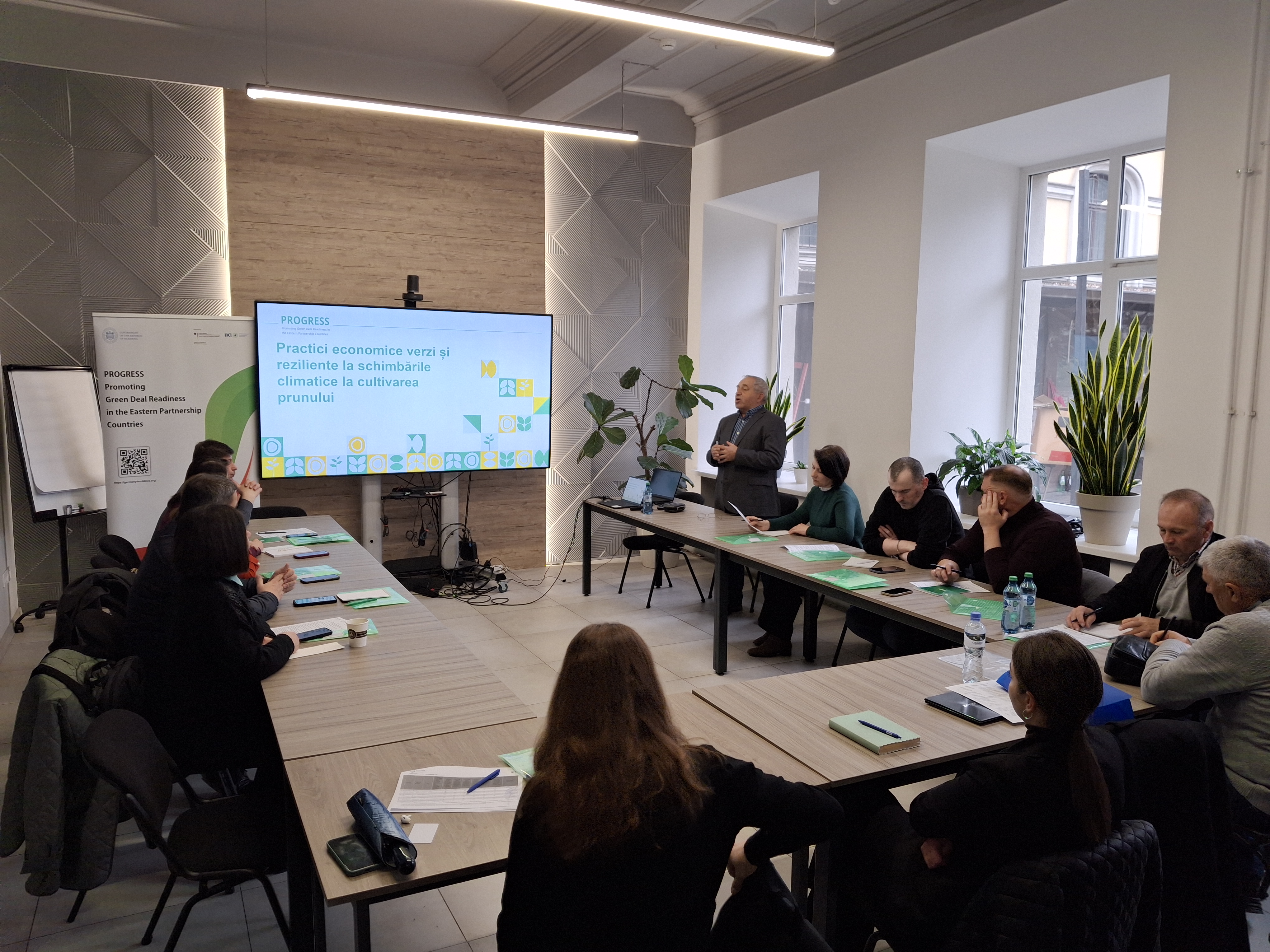
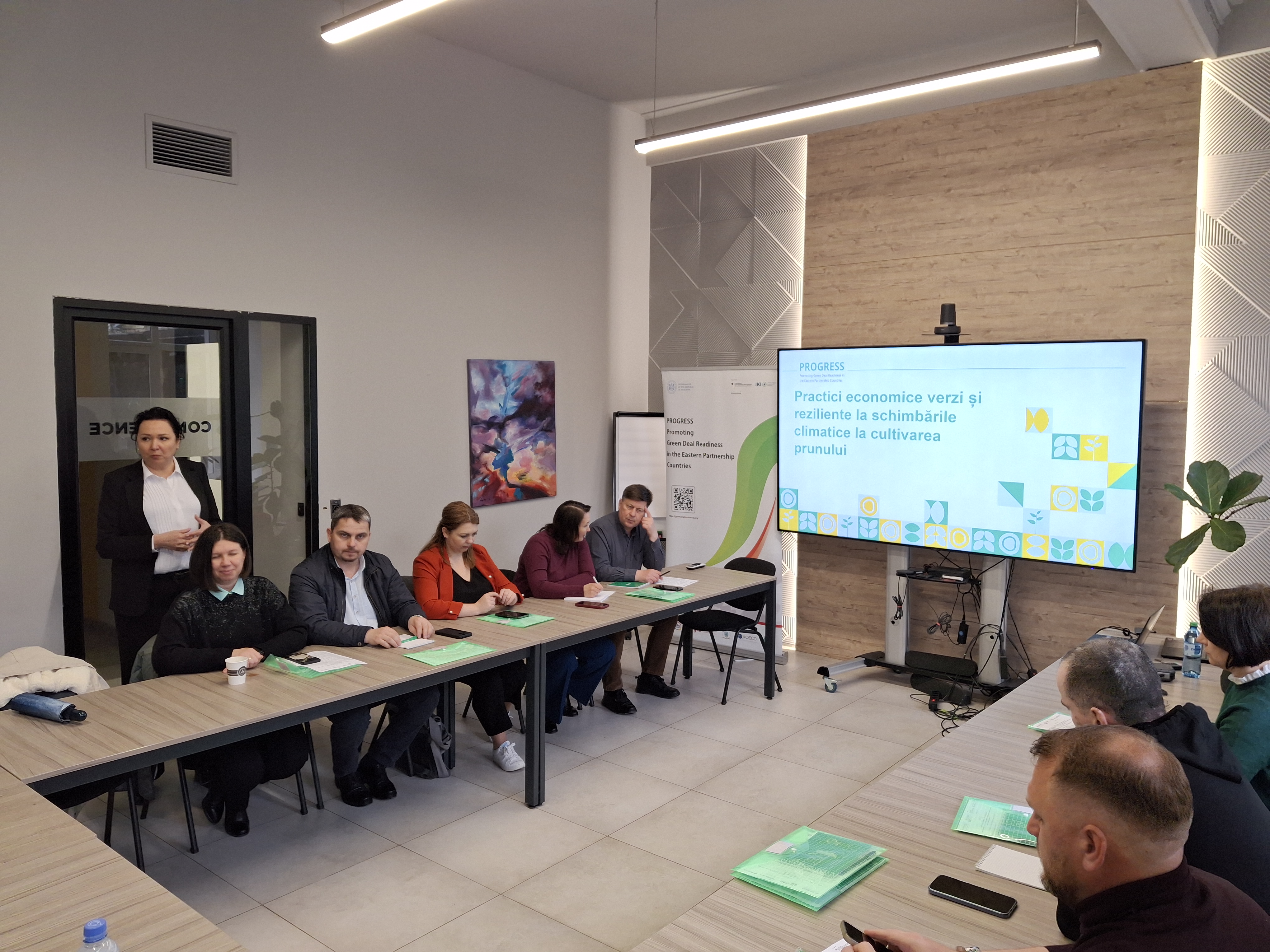
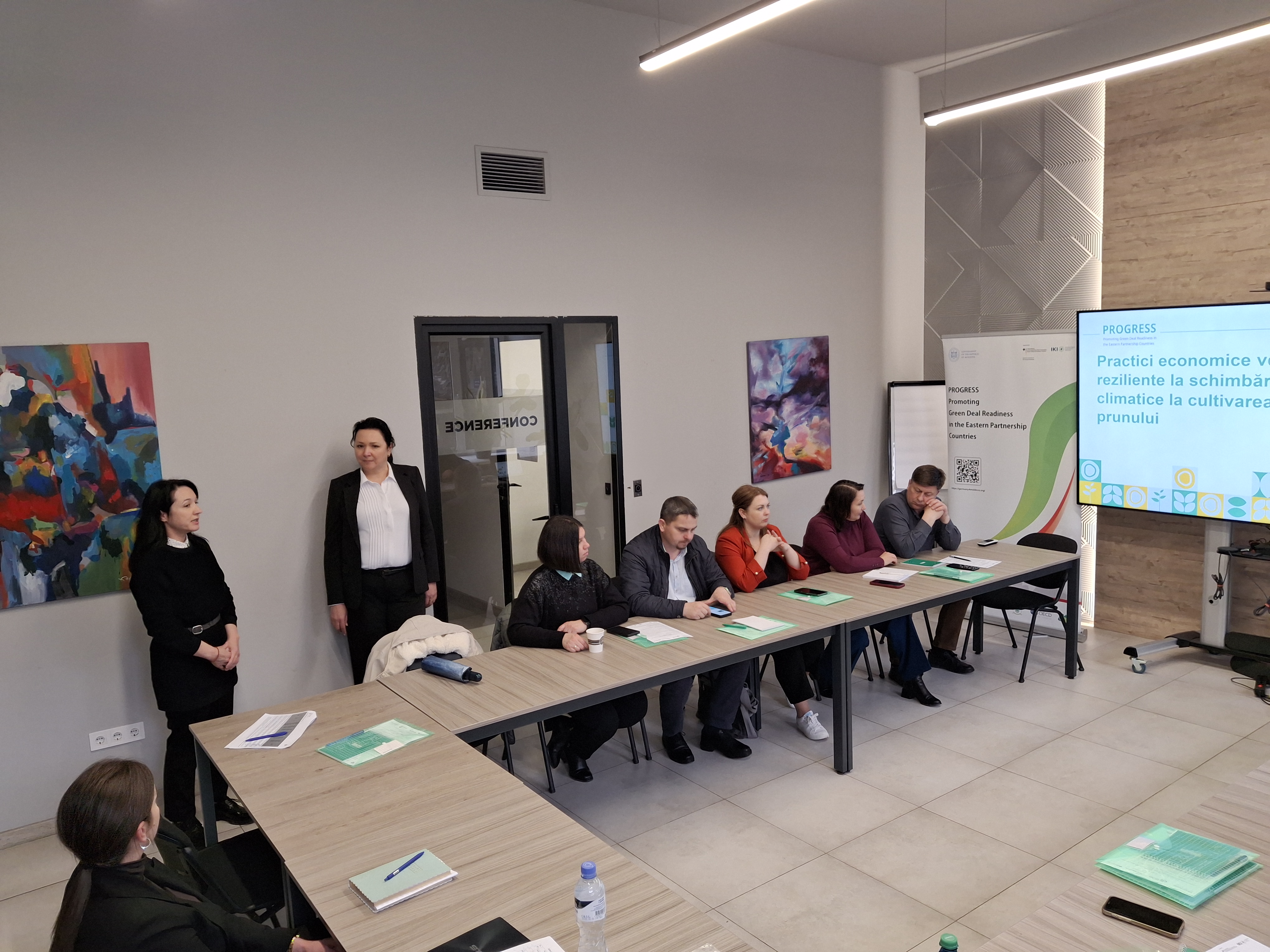
Launched on 1 April 2026 in Chișinău, the initiative brings together advisors from across the country. In their opening remarks, representatives of CCAR and GIZ Moldova underlined the importance of modern advisory services in addressing the growing impact of climate change on agricultural production.
Practical training tailored to key crops
The training is structured into a series of modules covering priority crops, including plums, cherries, apricots, peaches, walnuts, hazelnuts and almonds. The sessions address modern cultivation technologies adapted to changing climatic conditions, with a focus on improving resilience, productivity and resource efficiency.
The programme is delivered by national experts and combines theoretical knowledge with practical insights relevant to Moldova’s agricultural context.
Enhancing knowledge transfer to farmers
By strengthening the competencies of agricultural advisors, the initiative aims to improve the quality of advisory services provided to farmers and facilitate the uptake of sustainable practices at farm level.
The training sessions, organised throughout April, follow an interactive format that encourages exchange of experience and peer learning among participants.
This activity forms part of the broader PROGRESS project efforts to support Moldova in promoting green economic development and increasing the resilience of its agricultural sector.