
07.05.2026
Current Status of PROGRESS Pilot Projects Reviewed During Regional Field Visit Opening Paragraph
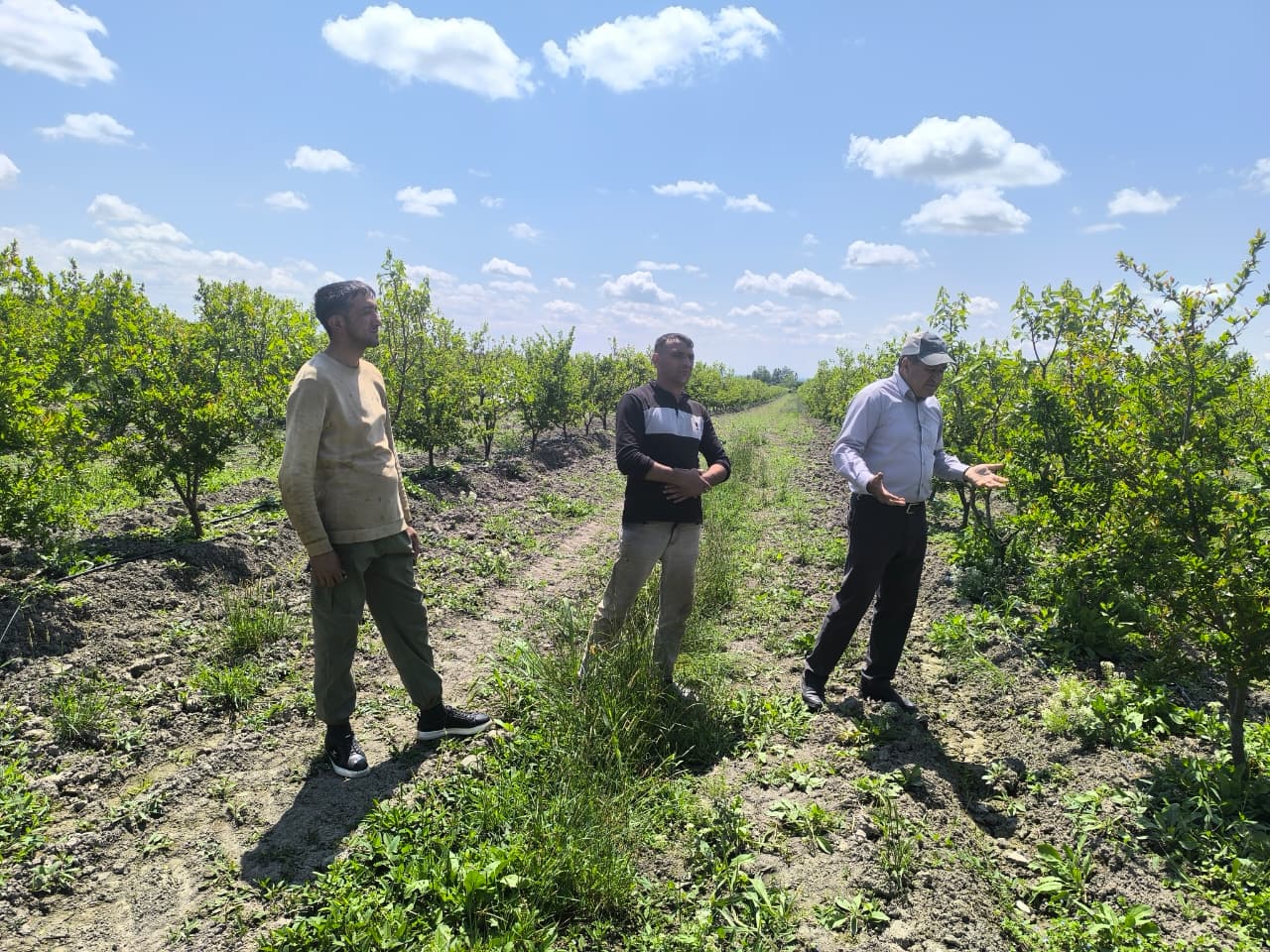
From 6–8 May 2026, Rovshan Abbasov, Pilot Projects Advisor of the PROGRESS project, conducted a regional field visit to review the implementation progress of ongoing pilot projects in Azerbaijan. The visit aimed to assess completed activities on-site, discuss technical and operational issues with project stakeholders, and identify next steps for the successful continuation of pilot implementation. Meetings were held with farmers, cooperatives, and local project partners in several districts.
The pilot projects implemented under the PROGRESS project aim to promote climate-oriented, resource-efficient, and environmentally sustainable agricultural practices in Azerbaijan. The activities focus on improving irrigation efficiency, introducing Integrated Pest Management (IPM) approaches, and applying fertilization methods based on soil, water, and plant analyses. Regular field visits and on-site monitoring are essential to evaluate implementation progress, identify challenges, and ensure that the pilot activities contribute to climate resilience, sustainable agricultural production, and reduced environmental impact.
On 6 May, a meeting was held with Saadat Dibirova, Chairperson of the Women Production Cooperative, within the framework of the pilot projects “Promoting Efficient Water Use in the Irrigation Sector of Azerbaijan” and “Application of Fertilization Based on Soil, Water and Plant Analysis.” During the meeting, fruit processing, grinding, drying, and packaging equipment procured by the “Maqbara” company was inspected. Discussions focused on the technical characteristics and operational use of the equipment, as well as planned training activities for cooperative members aimed at strengthening practical skills and operational capacities.
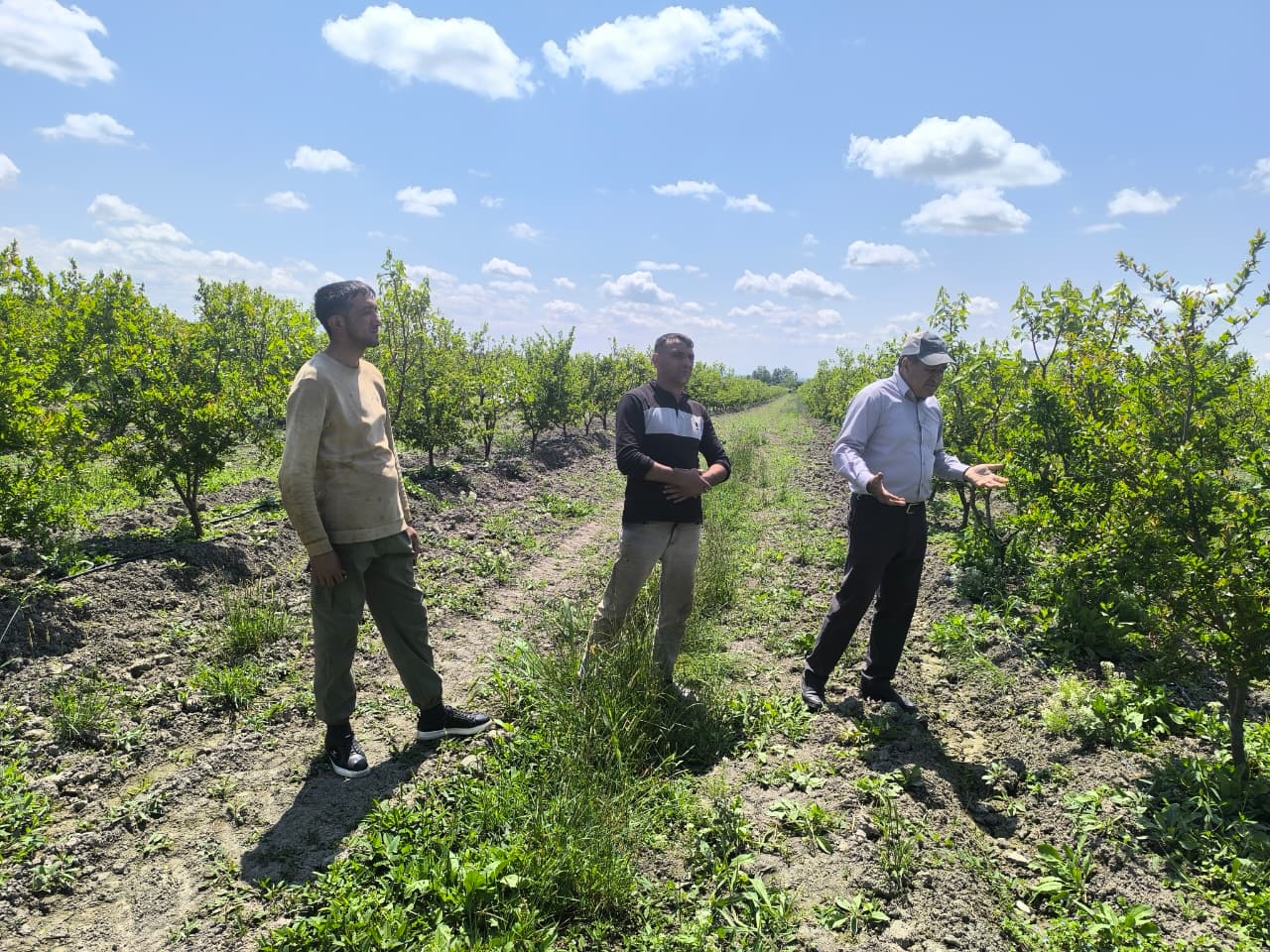
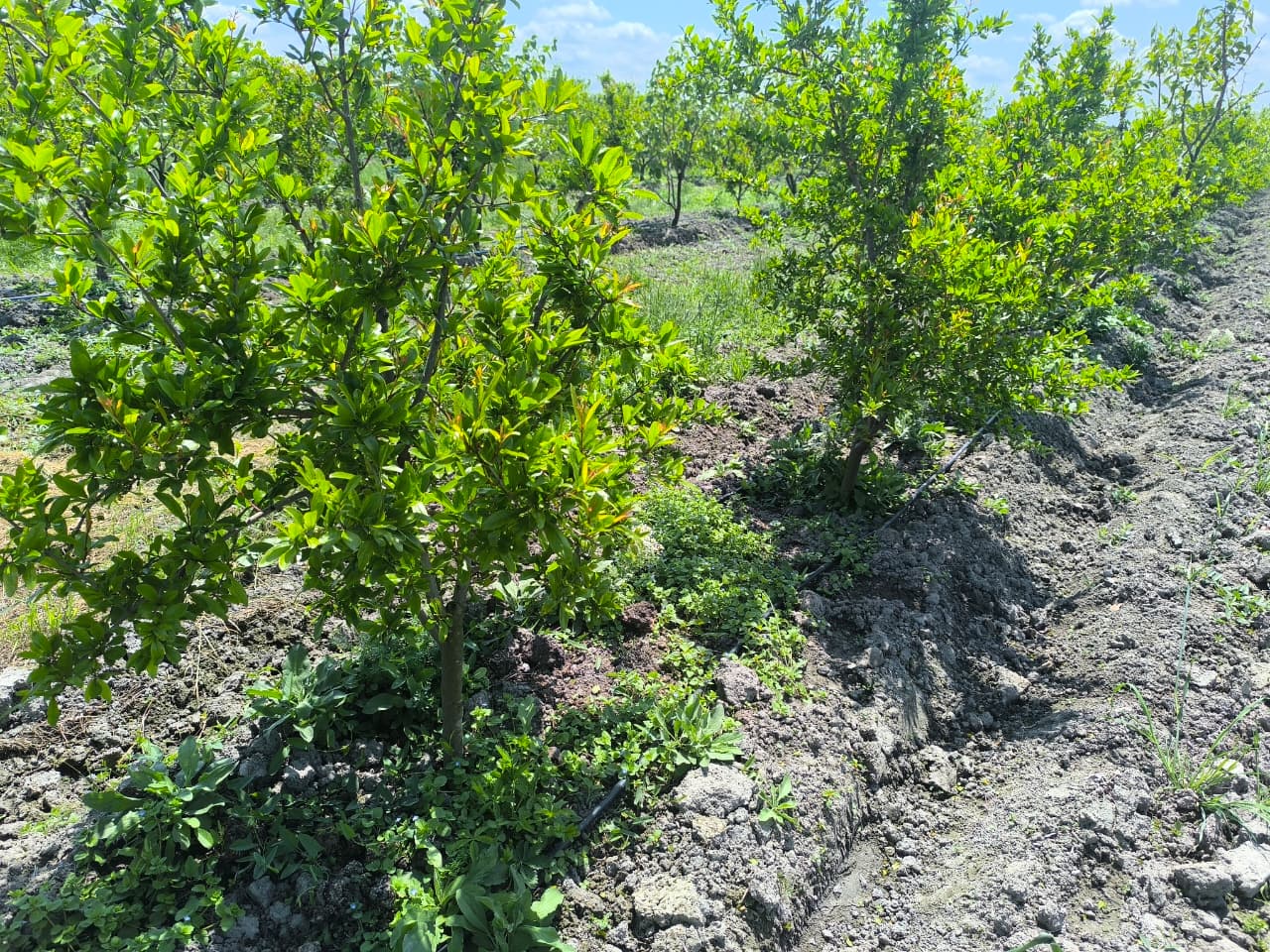
On 7 May, field inspections were conducted in Goychay city under the pilot project “Introducing Integrated Pest Management in the Demonstration Site.” Integrated Pest Management equipment installed in persimmon and pomegranate orchards belonging to farmer Hajiyev Zaur was reviewed. The demonstration activities are intended to compare treated and untreated orchard areas in order to evaluate the effectiveness of the IPM approach in reducing pesticide use while improving productivity and minimizing environmental impacts.
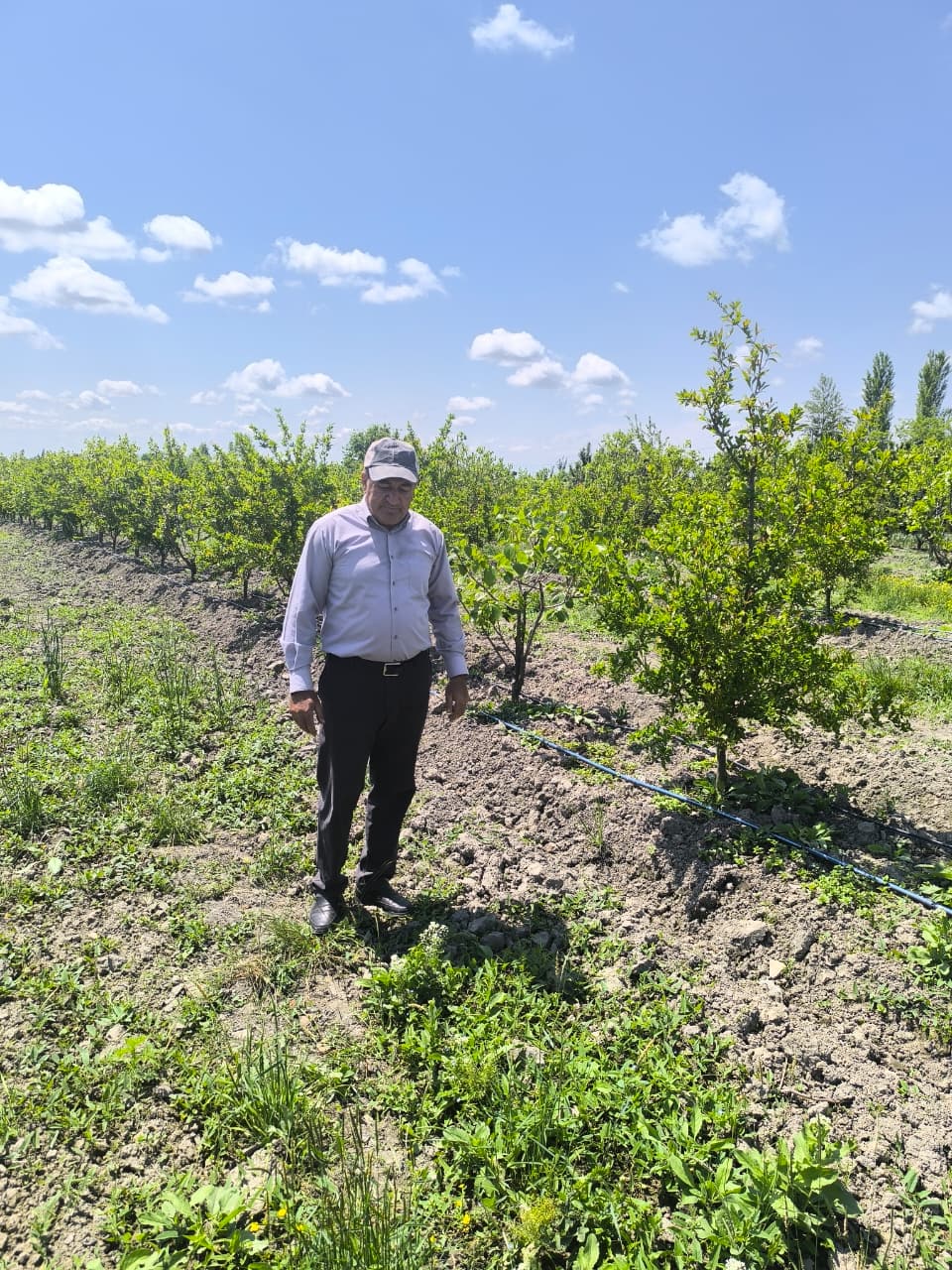
On the same day, a site visit was organized to the agricultural fields of “Ekobirlik” LLC located in Garamaryam village under the project “Promoting Efficient Water Use in the Irrigation Sector of Azerbaijan.” Modern irrigation systems installed in 1-hectare pomegranate and persimmon orchards were inspected. The functionality of the irrigation equipment, optimization of water consumption, and technical performance of the systems were assessed during the visit. Farmer Khurshud Gasimov highlighted that the installed systems had already contributed to considerable water savings and improved irrigation efficiency.
Within the framework of the visit, meetings were also held in the Hajigabul and Kurdamir districts with farmer Shirvan Ahmadov under the pilot project “Application of Fertilization Based on Soil, Water and Plant Analysis.” Discussions focused on the introduction of fertilization practices based on detailed soil, water, and plant analyses. To date, nutrient requirements have been identified based on 60 collected samples, and fertilization activities have already commenced accordingly. Additional analyses covering 140 more samples are planned, with wider implementation of the approach foreseen during 2026–2027.
The regional field visit demonstrated that the pilot projects are progressing successfully and that implementation activities are being carried out in line with the planned work schedule. The site inspections confirmed positive initial results in the areas of efficient water use, improved fertilization practices, and reduced pesticide application through Integrated Pest Management approaches.
Key discussions during the visit focused on strengthening technical implementation, improving operational capacities of local stakeholders, and ensuring the sustainability and replication potential of the pilot activities. Farmers and project stakeholders emphasized the practical benefits already observed through the introduction of modern irrigation systems and science-based agricultural practices.
As a follow-up, project teams discussed the next implementation stages, including additional training activities, further field analyses, continued monitoring of demonstration sites, and the expansion of pilot activities during 2026–2027.