
04.08.2026
PROGRESS Pilot Initiatives Demonstrate Practical Climate-Resilient Agriculture Solutions in Azerbaijan
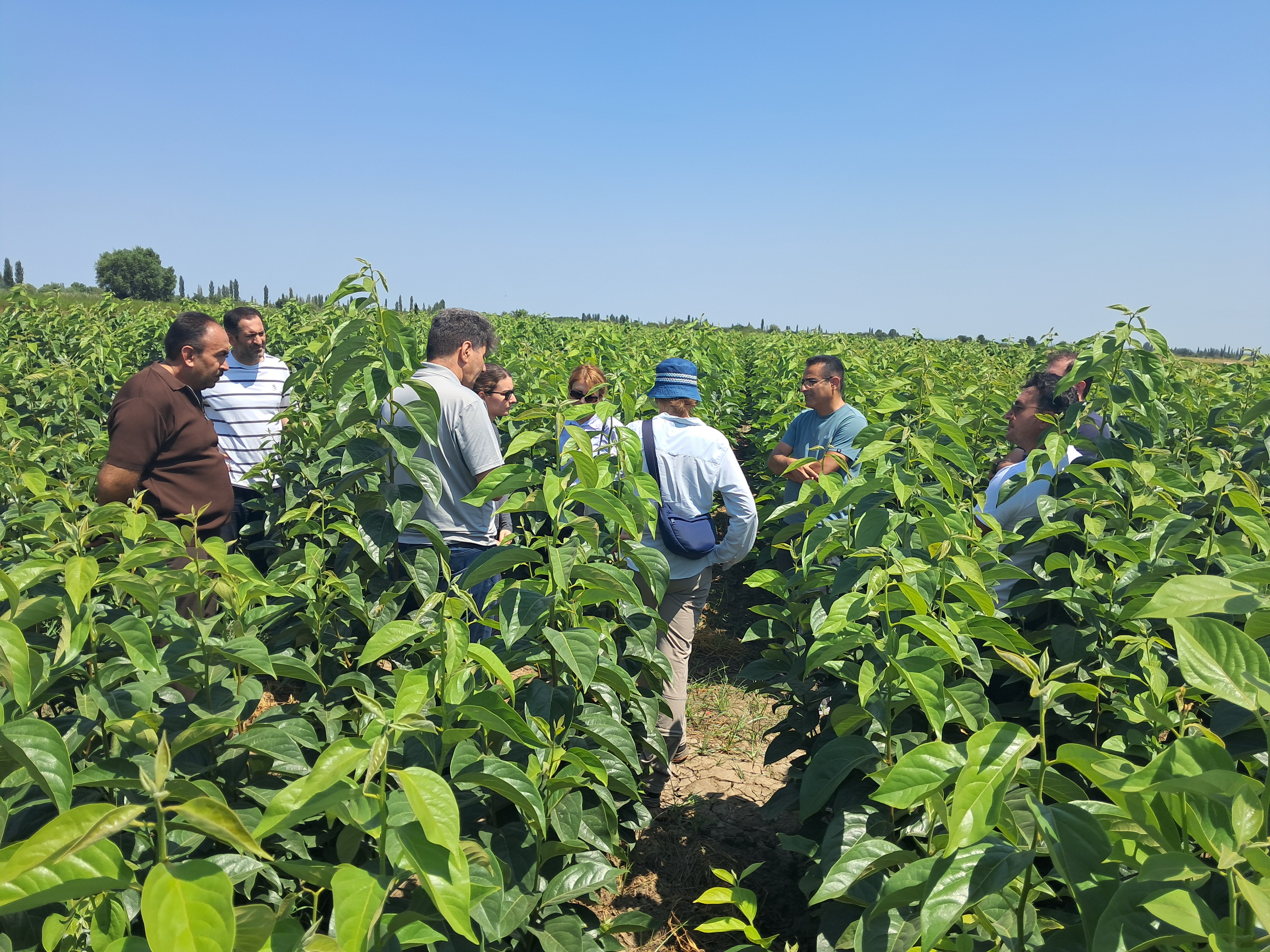
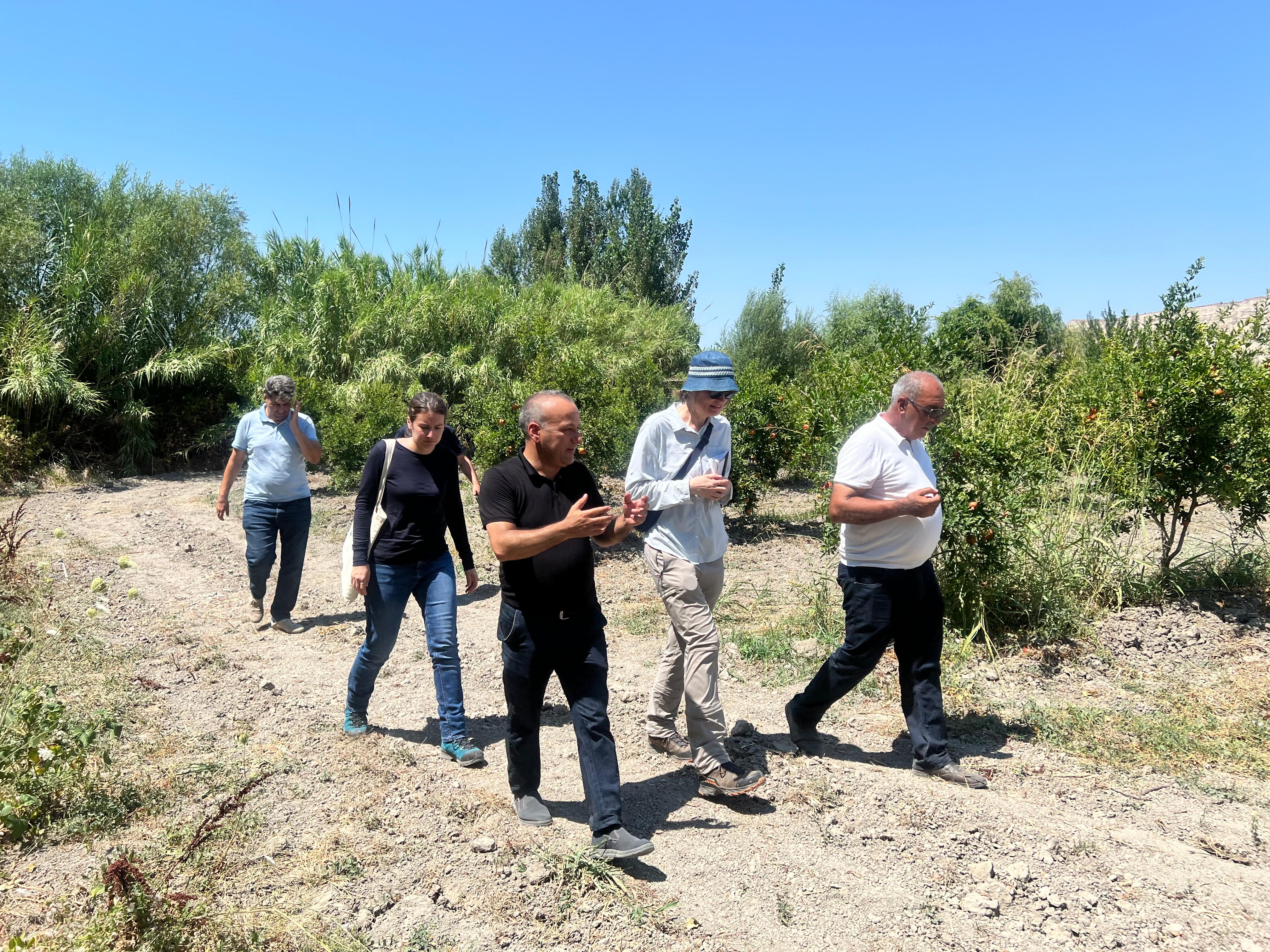
From 4 to 7 August, a delegation from the PROGRESS project conducted a field mission to several regions of Azerbaijan to review the progress of pilot initiatives promoting climate-resilient and resource-efficient agriculture, assess early results, and discuss the next stages of implementation with farmers and local partners.
The pilot initiatives address key challenges affecting the pomegranate and persimmon value chains, including inefficient water and input use, pest management, access to climate-resilient planting material, orchard protection, fruit processing and market access. By testing practical solutions under local conditions, the initiatives aim to generate experience that can be replicated more widely across Azerbaijan.
Practical solutions for more resilient orchards
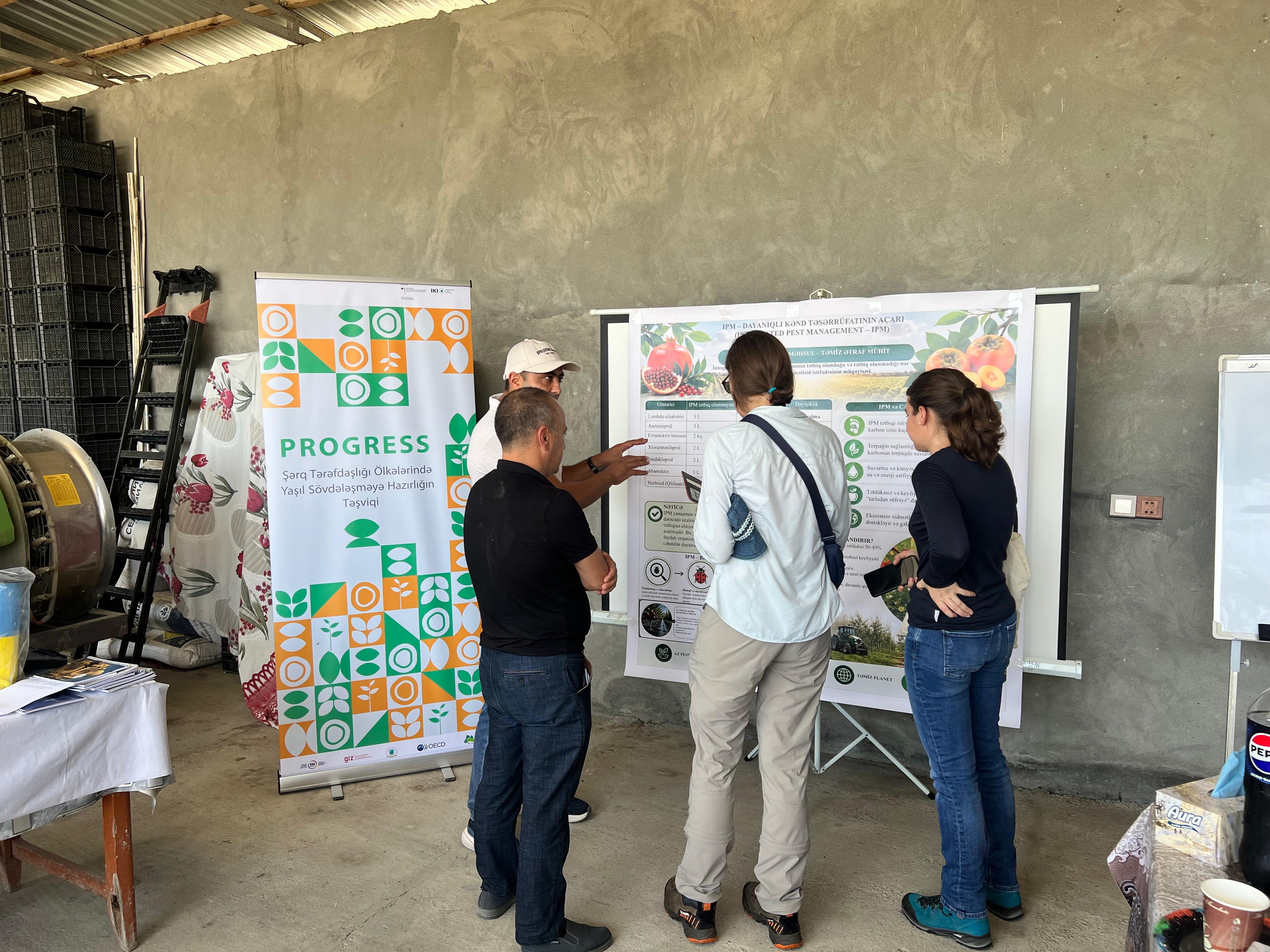
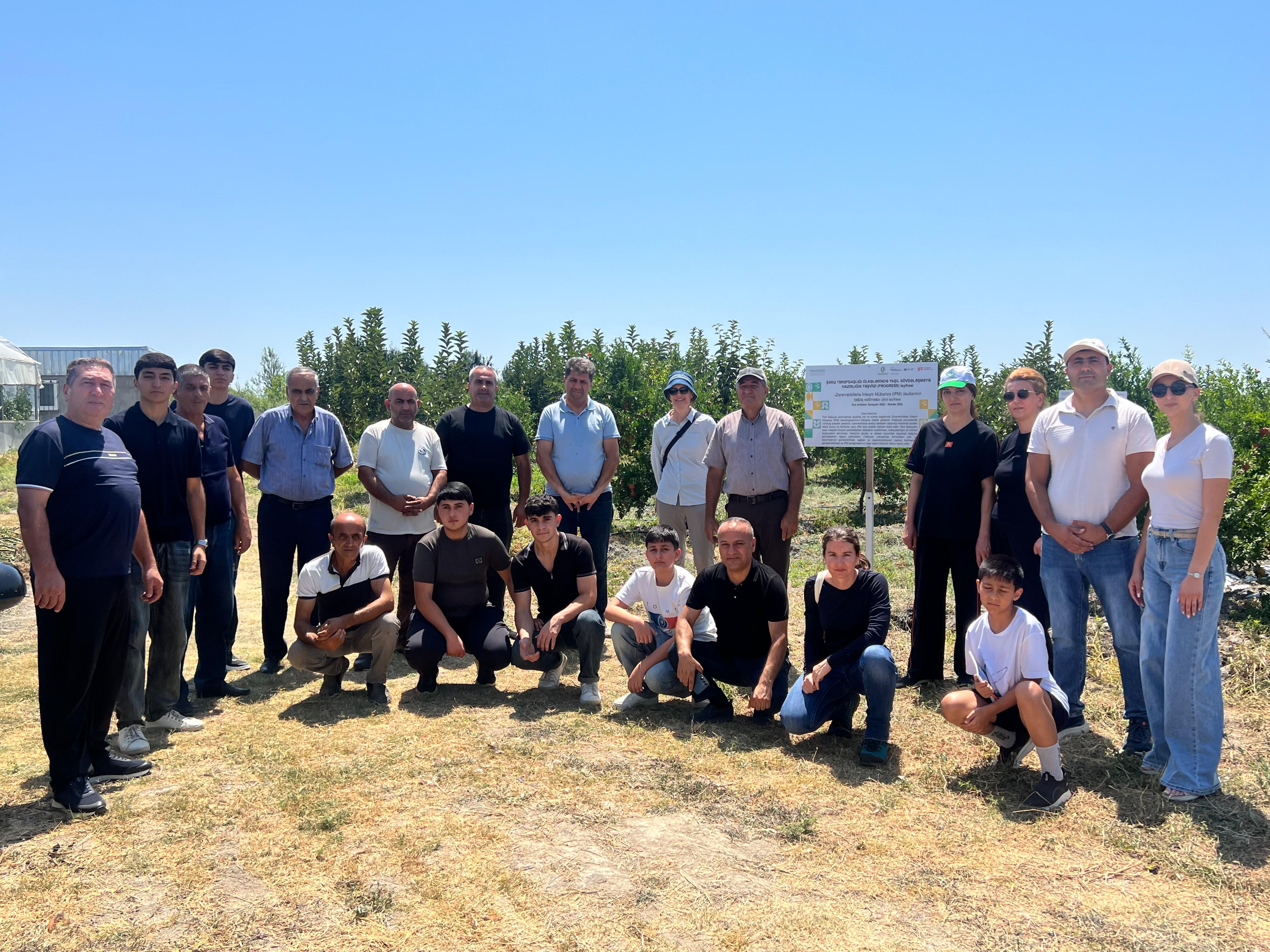
The field mission began in Goychay district with a visit to the Integrated Pest Management (IPM) demonstration site at the farm of Zaur Hajiyev. The delegation also attended an IPM training session with 20 farmers focusing on reducing pesticide use, applying biological control agents and pheromone traps, using polyethylene mulch, and improving water and nutrient management.
Results from orchards applying IPM practices were compared with those using conventional approaches, showing improvements in fruit quality and reductions in pesticide use. Participants also discussed the economic and environmental benefits of IPM and opportunities to expand its application.
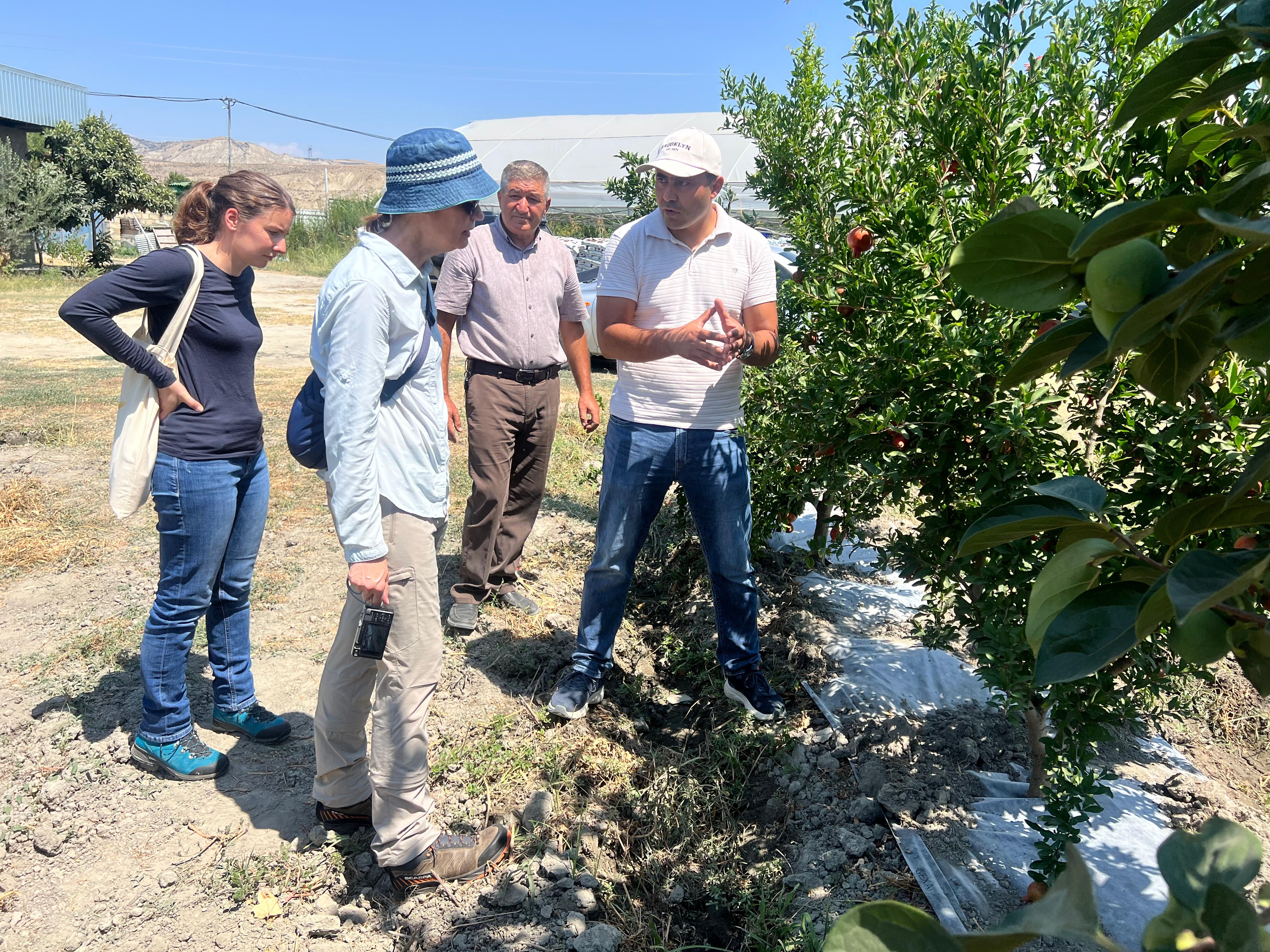
The delegation then visited the farm of Khurshud Gasimov, where drip irrigation systems have been installed in one-hectare persimmon and pomegranate orchards. According to the farmer, water consumption on the demonstration plots has been significantly reduced compared with traditional irrigation practices. The system also enables fertilisers to be applied directly to the root zone through fertigation, helping improve resource efficiency, productivity and fruit quality.
In Kurdamir, the delegation visited another pilot site testing fertilisation based on soil, water and plant analysis. Laboratory results are used to develop site-specific recommendations so that nutrients can be applied according to the actual needs of the orchard.
Strengthening resilience through planting material and orchard protection
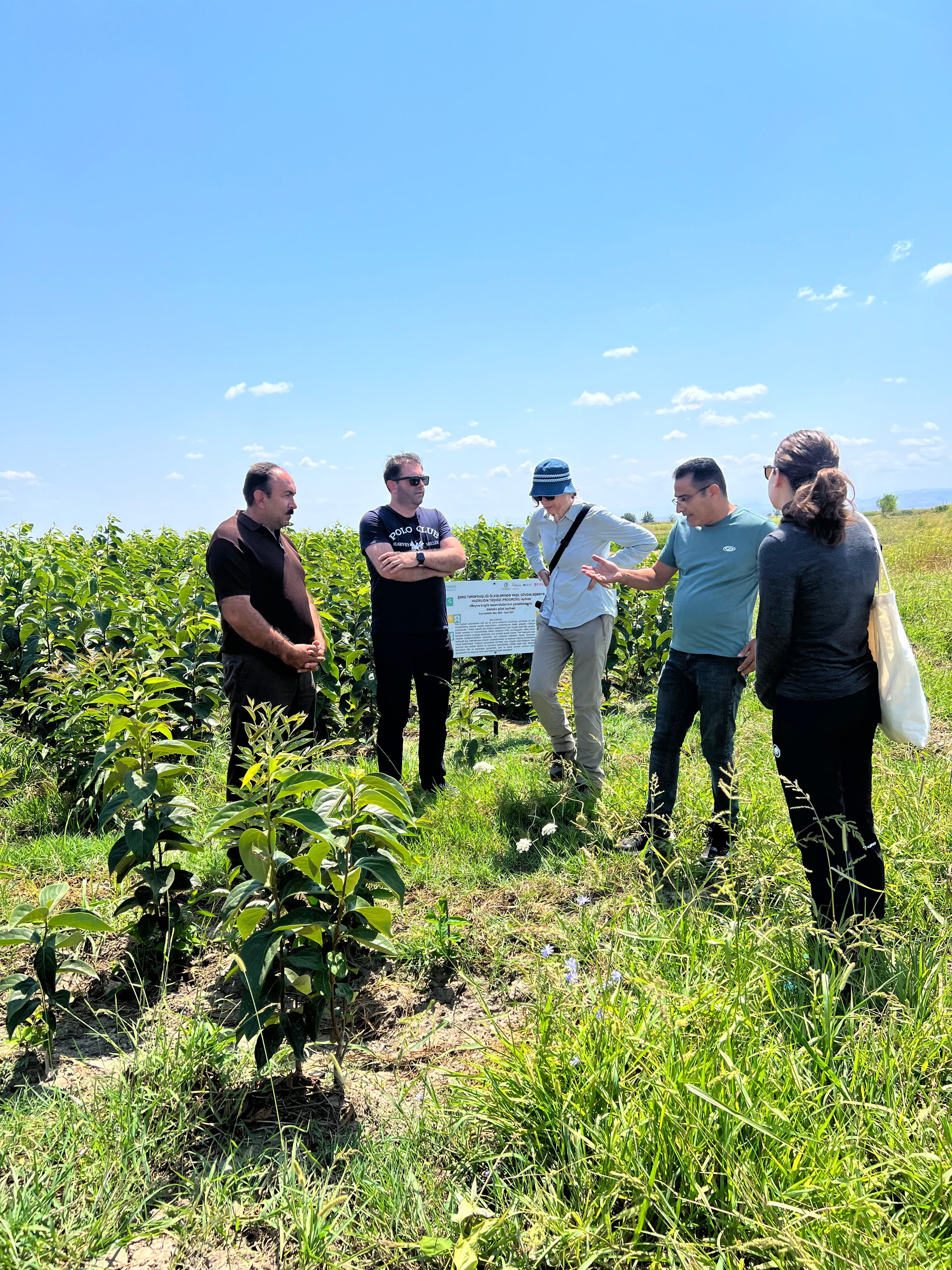
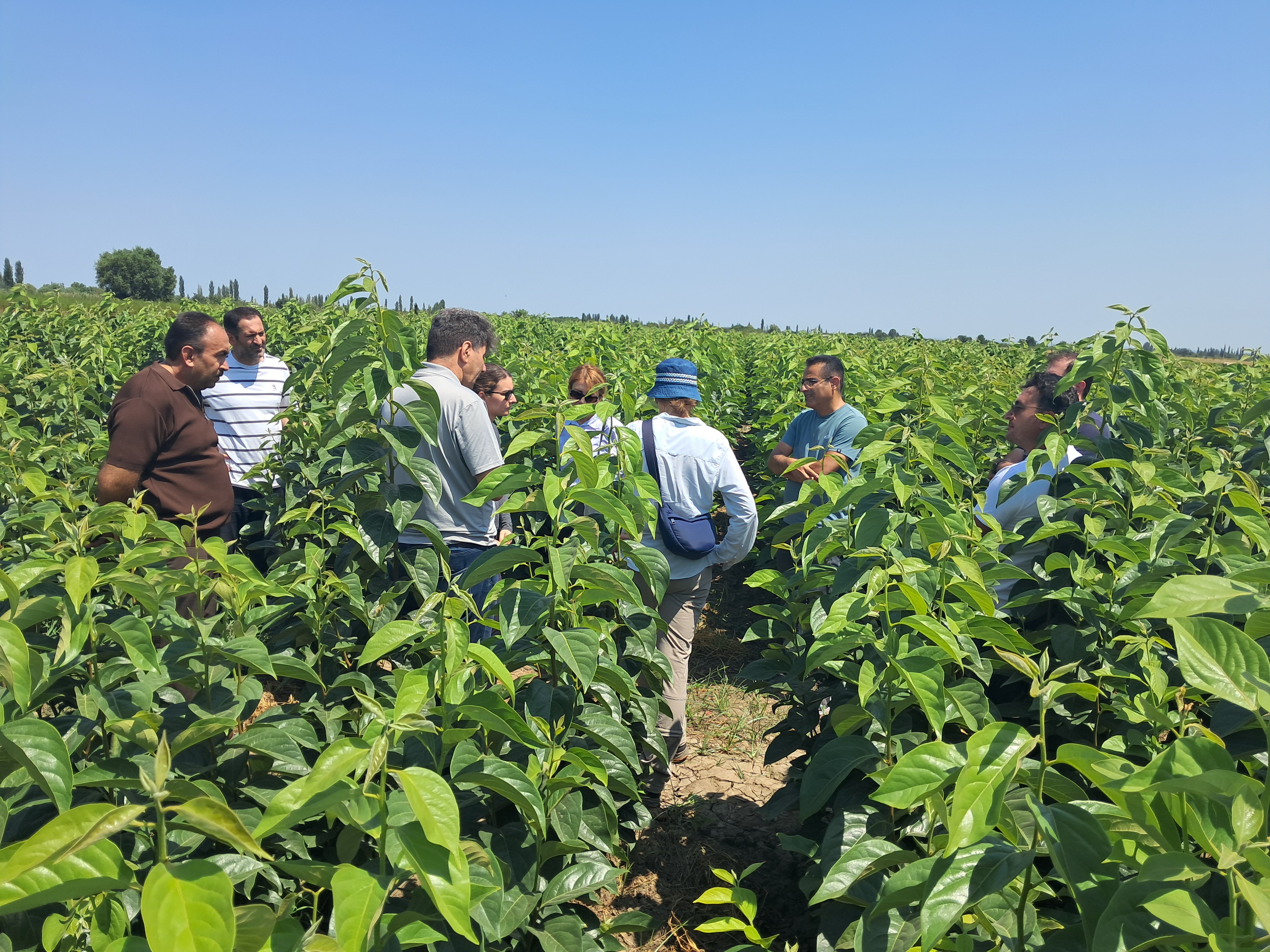
On 5 August, the mission continued in Tartar district with a visit to the site selected for the “Establishment of Tree Nurseries” pilot initiative. The pilot will test improved and climate-resilient planting material, including selected varieties cultivated in Europe, and assess their suitability under local conditions.
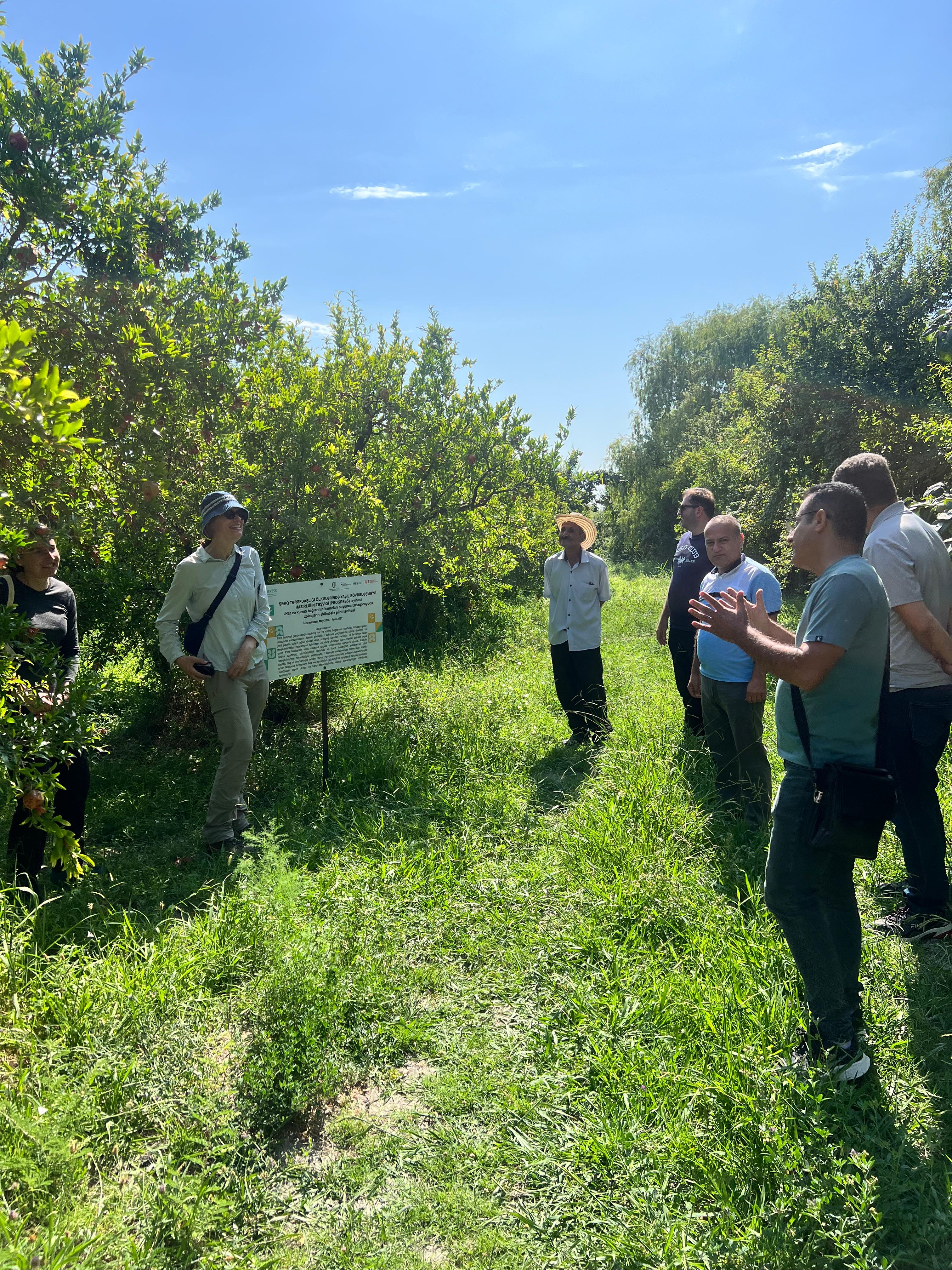
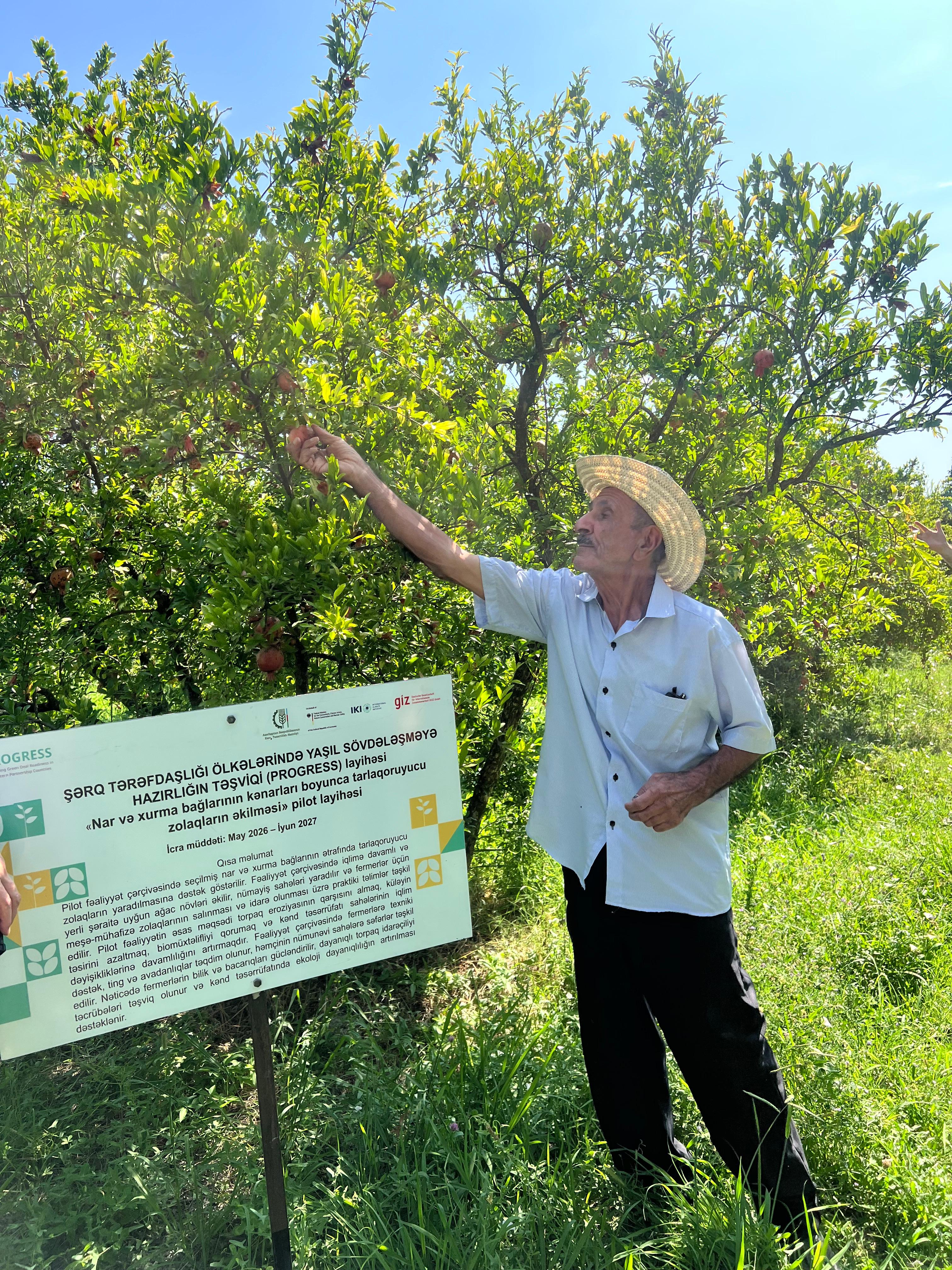
The delegation also visited two potential sites for the “Establishment of Buffer Strips Around Selected Persimmon and Pomegranate Orchards” pilot. Vegetative buffer strips are intended to help protect orchards from wind erosion, evaporation and other environmental pressures while strengthening the resilience of agricultural production systems.
Supporting women-led fruit processing
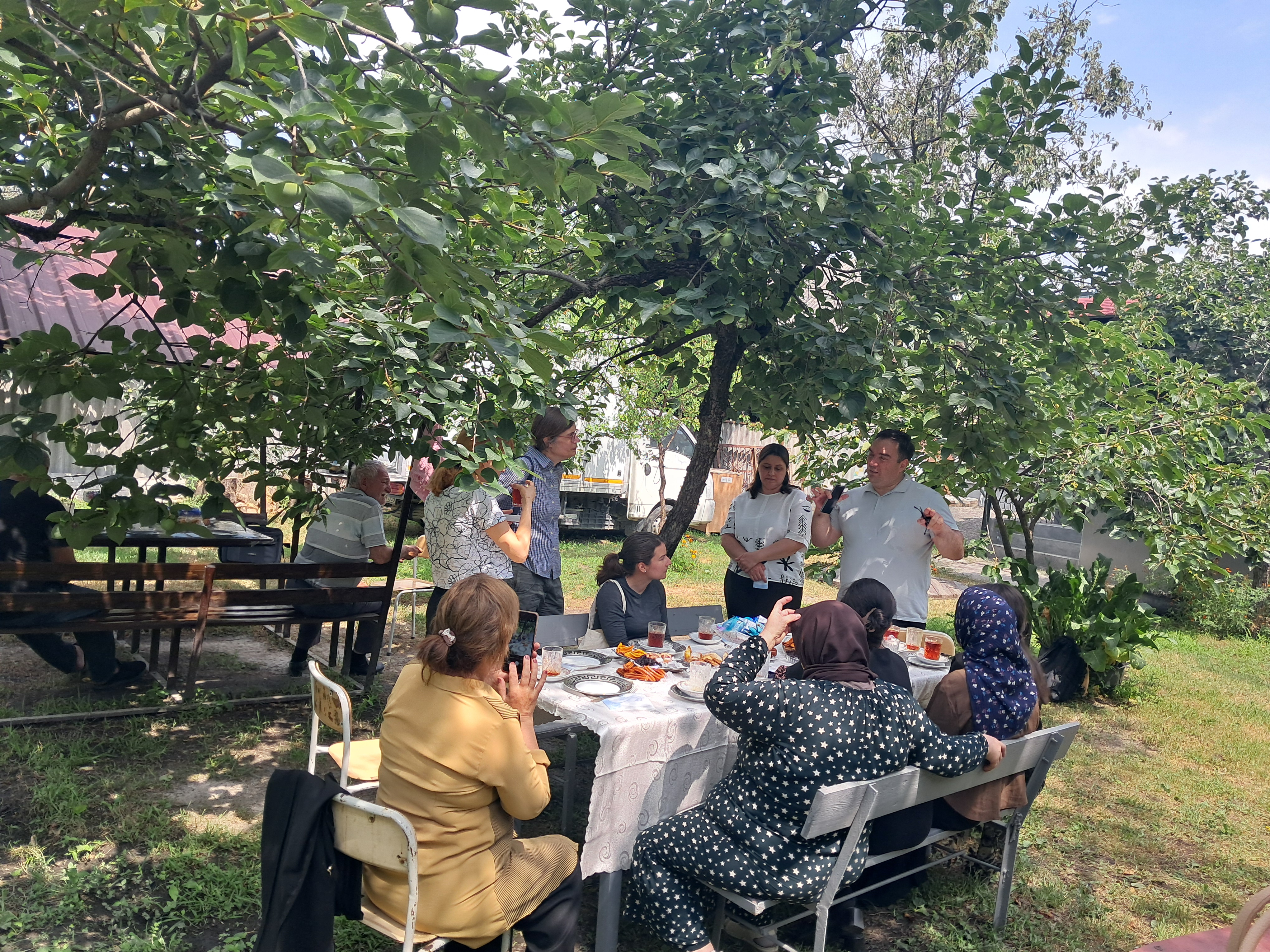
On 6 August, the mission visited the Chinar Women’s Cooperative in Zagatala under the pilot initiative “Launching a Production Line for Fruit Drying, Processing and Packaging.”
The meeting brought together 23 participants, including 16 women. As part of the pilot, cooperative members completed a three-day training programme on fruit processing and value chains and received a fruit dryer, fruit cutter and fruit grinder to strengthen their processing capacity.
The Chairperson of the Chinar Women’s Cooperative noted that the equipment has considerably reduced manual labour and facilitated the daily work of women involved in production. Further support is planned in packaging, product presentation and market access.
Project expert Dr Mehraj Abbasov stressed the importance of stronger direct access to markets so that producers can retain a greater share of the value generated from their products and strengthen the sustainability of rural enterprises and women-led cooperatives.
From pilot solutions to wider application
The field mission demonstrated how the PROGRESS project is translating climate-resilient agriculture concepts into practical solutions that can be tested under local farming conditions.
Together, the pilot initiatives address different elements of sustainable pomegranate and persimmon production - from integrated pest management and efficient water and nutrient use to climate-resilient planting material, orchard protection, value-added processing and improved market access.
The lessons and results generated through the pilots will support knowledge sharing among farmers and provide practical models for the wider adoption of sustainable and resource-efficient agricultural practices in Azerbaijan.
_1787074438.jpeg)
_1787074438.jpeg)