
13.04.2026
Advancing Climate-Resilient Horticulture in Ukraine through ToT Trainings
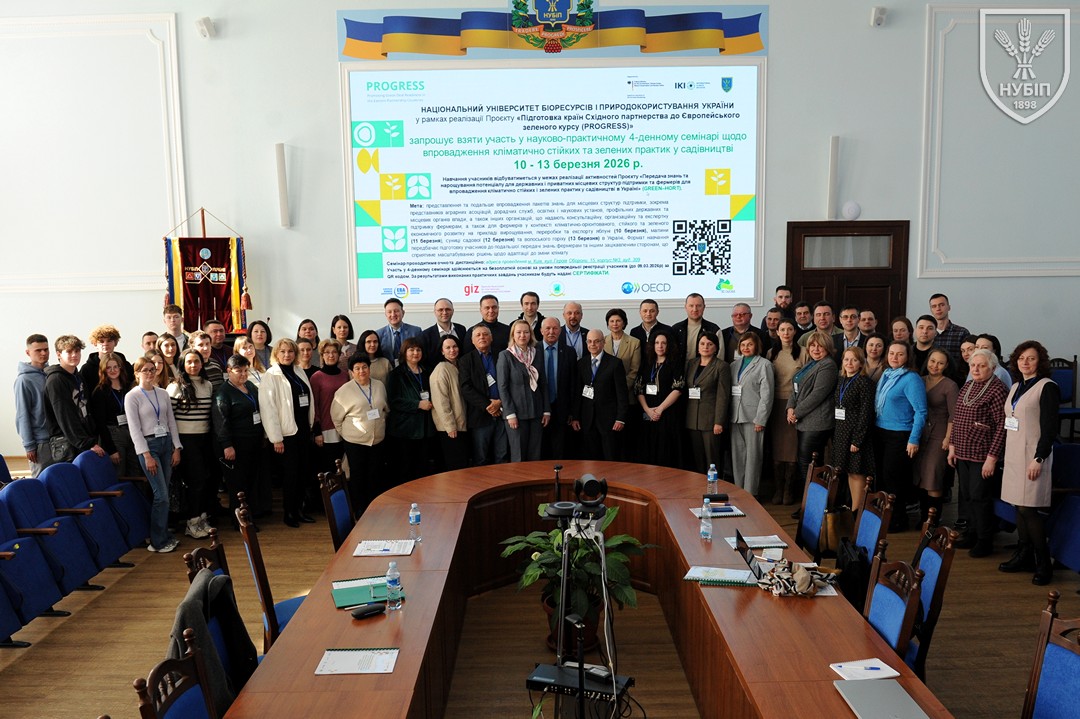
On March 10–13, 2026, four-day international ToT trainings dedicated to the implementation of climate-resilient and environmentally oriented practices in horticulture were organized at the National University of Life and Environmental Sciences of Ukraine.
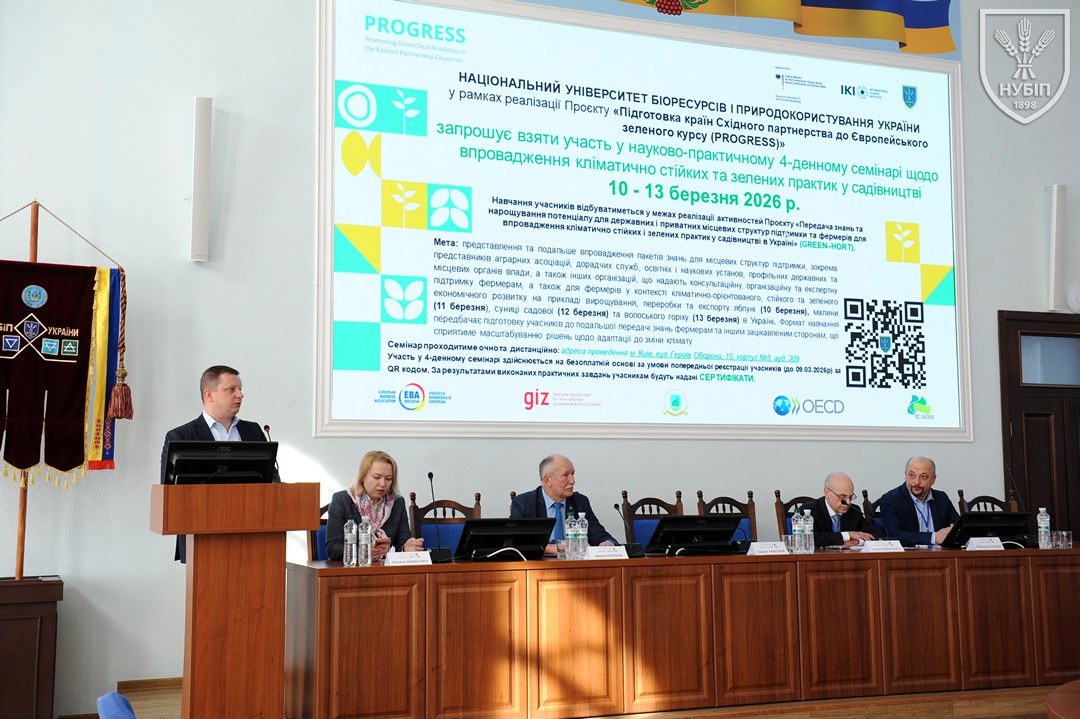
The seminars were organized within the framework of the PROGRESS project in Ukraine. The main objective of the event was to present ToT knowledge packages for further dissemination and implementation by local support structures, including representatives of agricultural associations, advisory services, educational and research institutions, relevant national and local authorities, as well as organizations providing consulting, organizational, and expert support to farmers. The trainings also directly targeted farmers in the context of climate-oriented, sustainable, and green economic development, particularly in the production, processing, and export of horticultural crops.
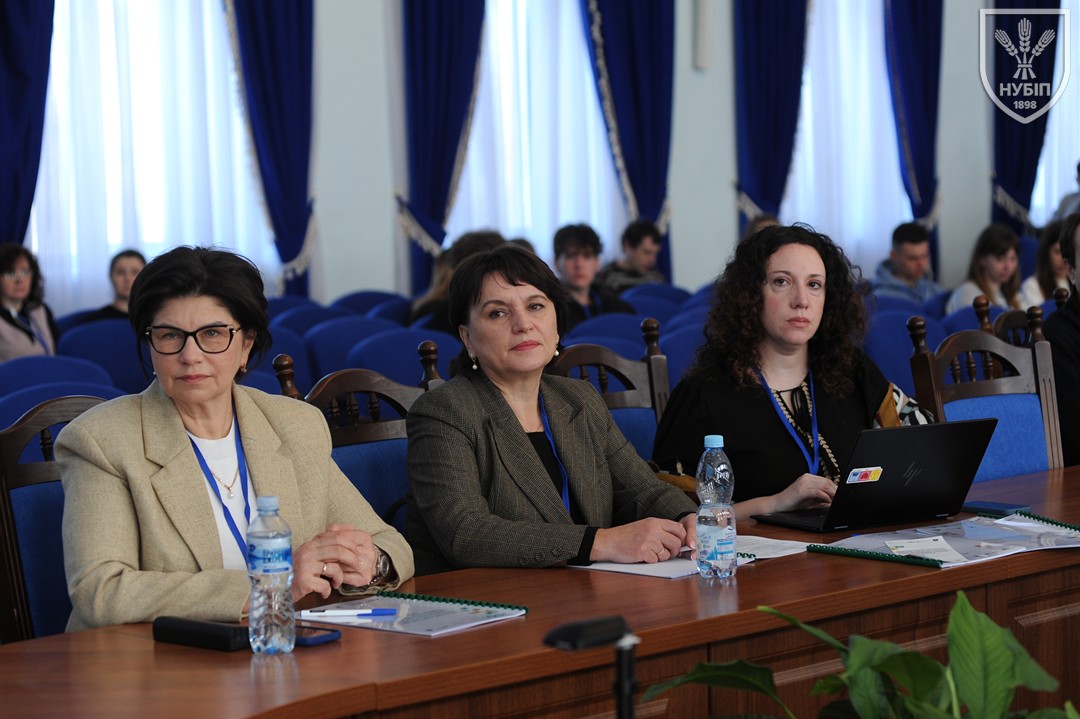
The seminars were conducted in a hybrid format, allowing participants to join both online and offline at the National University of Life and Environmental Sciences of Ukraine (Kyiv, 15 Heroiv Oborony Street). A total of 379 participants representing 92 institutions registered for the event. Approximately 150 participants attended in person.
The training format followed a “training of trainers” (ToT) approach aimed at preparing participants to further transfer knowledge to farmers and other stakeholders, thereby contributing to the scaling of climate adaptation solutions and strengthening the Agricultural Knowledge and Innovation System (AKIS) in Ukraine.
The ToT trainings were structured thematically, with each day dedicated to a specific crop: apple (March 10), raspberry (March 11), strawberry (March 12), and walnut (March 13), reflecting key sectors of Ukrainian horticulture.
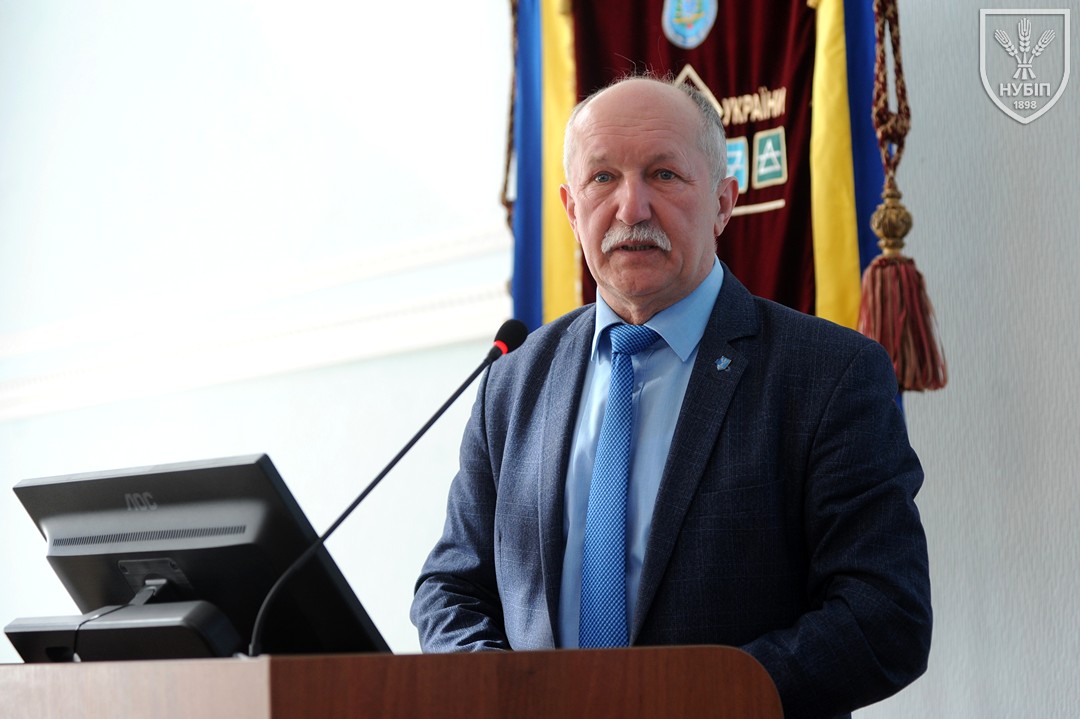
The first day of the seminar focused on apple production. Opening remarks were delivered by Vice-Rector for Scientific and Pedagogical Work and International Activities Oleksandr Labenko, PROGRESS Project Manager in Ukraine (GIZ) Dmytro Berezovskyy, and GREEN-HORT Grant Manager and Vice-Rector Serhii Kvasha. In their speeches, they emphasized the importance of adaptation the Ukrainian agricultural sector to climate change, developing climate-adapted technologies, and strengthening cooperation among science, government, and business.
The scientific part of the program focused on practical aspects of adapting horticulture to changing climate conditions. Professor Liudmyla Shevchuk presented training materials on adaptive apple cultivation and post-harvest technologies under climate change. Professor Tetiana Mirzoieva addressed market trends and export opportunities. Associate Professor Yuliia Slyva highlighted compliance with international standards and certification schemes, emphasizing the need to align Ukrainian practices with global food safety and quality requirements.
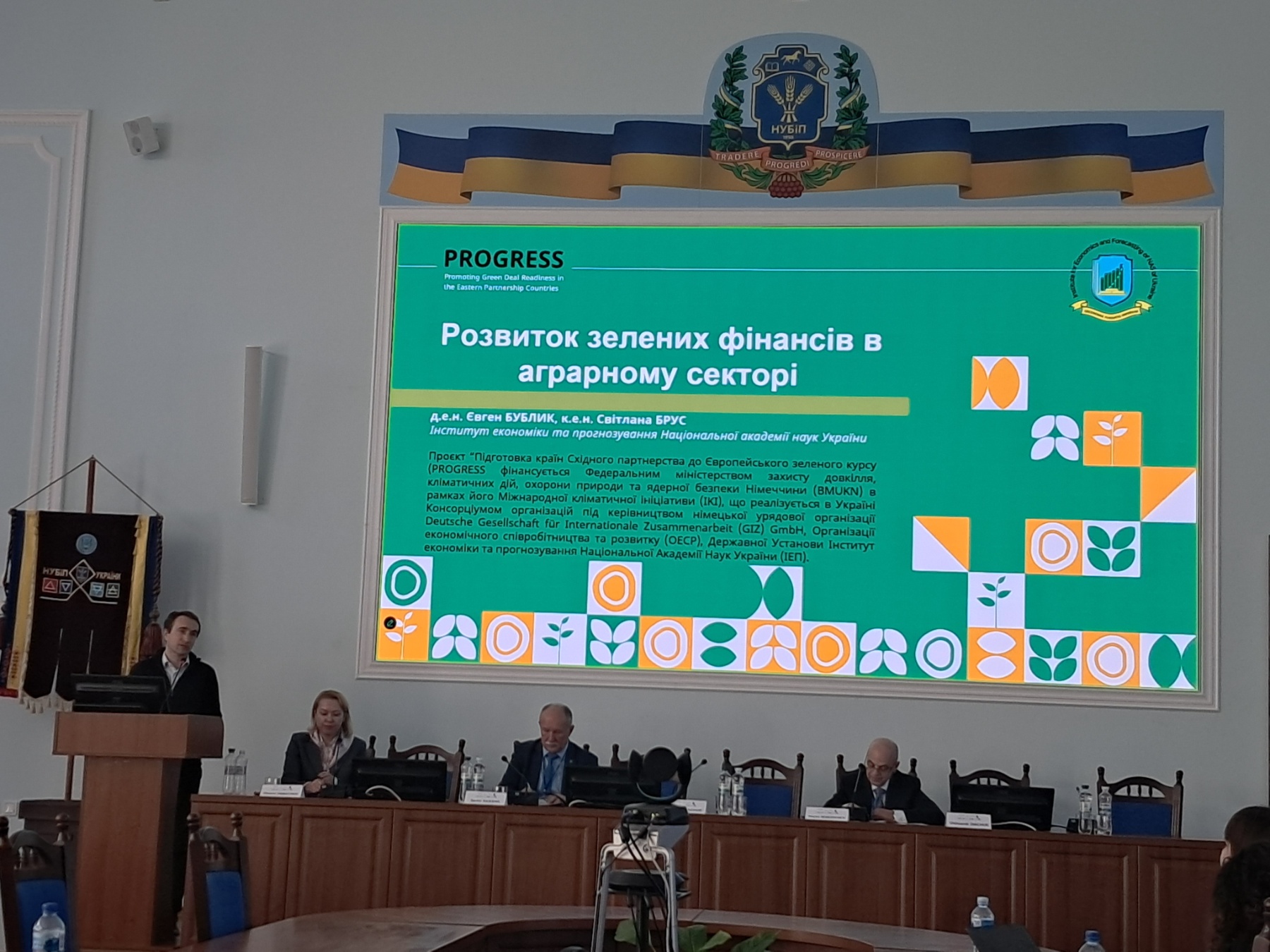
In the second half of the day, innovative approaches to climate adaptation were presented. Viktor Ivkin introduced agrivoltaics as an interdisciplinary system combining agricultural production with renewable energy generation. The day concluded with presentations by Yevhen Bublyk and Svitlana Brus from the Institute for Economics and Forecasting of the National Academy of Sciences of Ukraine, focusing on green finance and investment opportunities in climate-oriented agricultural projects. The first day demonstrated a high level of engagement and strong interest in innovative solutions for sustainable horticulture.
The second day, held on March 11, 2026, focused on raspberry production and the challenges of berry sector development under climate change. The session was moderated by Serhii Zamidra, whose facilitation ensured effective communication and dynamic discussion among participants.
Welcoming remarks were delivered by Rector Vadym Tkachuk, Iryna Shumik, and Serhii Kvasha, who emphasized the importance of integrating European sustainability principles, implementing climate-adapted production technologies, and strengthening cooperation among science, policy, and business.
The scientific program addressed key practical aspects of raspberry production. Yurii Andrusyk presented adaptive cultivation technologies and post-harvest improvements. Oksana Zavadska focused on environmentally friendly processing technologies, while Oksana Makarchuk analyzed market trends and export opportunities, particularly within the European Union. Yuliia Slyva addressed certification requirements and their role in enhancing competitiveness.
Additional sessions covered innovative technical and ecological solutions. Andrii Antonov presented solar integration approaches (Solar Sharing), while Olha Kravchenko highlighted ecosystem-based climate adaptation strategies. Olha Honcharenko presented integrated plant protection approaches combining biological, agrotechnical, and chemical methods in line with environmental safety standards.
The third day of the seminar was dedicated to strawberry production. Opening remarks were delivered by Mykola Moroz, who emphasized Ukraine’s ongoing alignment with EU agricultural policies and the importance of innovation in the sector.
Yana Tereshchenko presented key aspects of strawberry cultivation, including modern technologies, varietal characteristics, and climate-related risks such as temperature fluctuations, frost events, and excessive precipitation. Oksana Zavadska presented green processing technologies, including puree production, freezing, and freeze-drying, highlighting their role in increasing efficiency and export potential.
Oksana Makarchuk analyzed market development, production dynamics, pricing, and export trends, particularly the growth of frozen strawberry exports to EU markets. Yuliia Slyva presented international standards, including Codex Alimentarius, and new EU regulations on environmental claims aimed at preventing greenwashing.
The concept of agrivoltaics was further explored by Ivan Samsonenko as an innovative solution for improving land-use efficiency and strengthening climate resilience in horticulture.
The fourth and final day of the seminar, held on March 13, 2026, focused on walnut production. Opening remarks were delivered by representatives of the Ministry and project leadership, who emphasized the importance of climate-resilient practices and continued sector development.
Professor Volodymyr Mezhenskyi presented the biological characteristics, breeding, and current state of walnut production in Ukraine, emphasizing its genetic diversity and importance. Serhii Hunko analyzed global production trends, noting the dominance of China, the USA, and Chile, and Ukraine’s position on the global market.
Oksana Makarchuk addressed economic challenges, while Yuliia Slyva emphasized the importance of compliance with international standards such as Codex Alimentarius. Olha Kravchenko presented innovative approaches to green ammonia production and its role in sustainable agriculture.
Over the four days, participants covered the full value chain – from cultivation and plant protection to processing, certification, and market development—across key horticultural crops.
As a follow-up, the next stage of the project will include demonstration projects for farmers, businesses, and communities, with a competitive selection process planned. The next event will take place on 24th April 2026 in Zalishchyky at the Zalishchyky Professional College of the University, where study seminars will continue with the involvement of farmers and local communities, focusing on practical implementation and knowledge transfer.
_1777105541.jpg)
_1777105541.jpg)
_1777105544.jpg)